Investigations
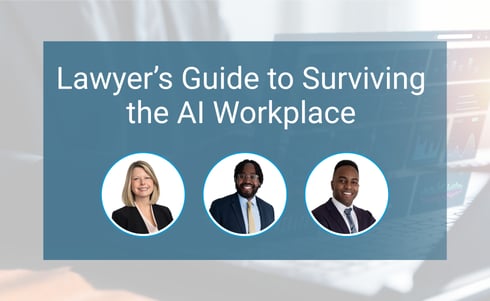
An Employment Lawyer’s Guide to Surviving the AI Workplace
AI is becoming part of nearly every stage of the employment relationship, from recruiting and hiring to performance management, workplace investigations and litigation. While these tools can save time and make certain tasks easier, they can also create new legal and practical risks for employers. At Dorsey’s 2026 Labor & Employment Symposium, Dorsey attorneys Susan Lorenc, Henry Adebisi, and Julian Nunally joined Valeria R. Cometto, Assistant General Counsel at Delta Air Lines, to discuss how AI is changing the workplace and what employers can do to manage those risks. One area employers should be watching closely is recruiting and hiring. AI is increasingly being used for recruiting, resume screening, candidate ranking and interview-related tasks. But using a third-party tool does not shift responsibility for the resulting employment decisions. Employers still need to ensure those decisions comply with federal, state and local anti-discrimination laws. AI use can create challenges after an employee is hired as well. Managers and HR professionals may use AI to draft performance reviews, disciplinary notices, coaching documentation and performance improvement plans. Because AI can generate inaccurate information and cannot independently assess credibility or context, human review remains important before employers rely on those outputs. Employers should also consider what information employees are putting into AI tools. Personnel records, customer information, trade secrets and privileged communications can create confidentiality, privacy and privilege concerns when entered into public AI systems. Existing confidentiality policies may need to be updated to specifically address what employees can and cannot share with AI tools. AI is also changing employee complaints and the early stages of employment disputes. The panel discussed how AI can help employees create longer and more sophisticated complaints and demand letters containing legal terminology, statutory references and detailed allegations. As Julian explained during the discussion, employers should look beyond how polished a complaint appears and focus closely on the facts actually being alleged. Managing these risks starts with understanding how AI is actually being used within the organization. The panel discussed developing clear acceptable-use policies, establishing approval procedures for AI tools, updating confidentiality policies, training employees and managers, and regularly auditing AI use. Ultimately, AI should assist employment decision-making rather than replace human judgment. Employers remain responsible for their employment decisions, making human oversight and review an important part of using AI in the workplace. This post highlights key takeaways from “AI Is Ruining Your Life: An Employment Lawyer’s Guide to Surviving the AI Workplace,” a panel presented at Dorsey’s 2026 Labor & Employment Symposium.
September 16, 2026
by Susan Lorenc, Henry Adebisi, Julian S. Nunally, and Valeria R. Cometto
Investigations
Nisha Verma on the Fallout of the Blake Lively and Justin Baldoni Dispute
Dorsey Partner Nisha Verma offered perspective on the legal and reputational fallout surrounding the Blake Lively and Justin Baldoni dispute. Drawing on her experience in workplace investigations and employment disputes, Nisha addressed both the legal significance of the settlement and the reputational consequences of handling workplace-related disputes in the public eye. Nisha was quoted in a USA Today article, noting that “they both have a right to claim victory,” adding that each party prevailed on “significant and novel issues within their respective cases.” She also discussed the lasting reputational impact public litigation can have on individuals and organizations alike. Find the full article: Nisha Verma Offers Insight on Lively/Baldoni Settlement and Reputational Impact | News & Resources | Dorsey
May 22, 2026
by Nisha Verma

Investigations
One Year In: What We Know About The EEOC’s Approach to Employer DEI Programs
Following his inauguration in January 2025, President Trump signed a flurry of executive orders affecting diversity, equity, and inclusion (“DEI”) policies across the public and private sector. Particularly concerning for private employers who are federal contractors, Executive Order 14173, “Ending Illegal Discrimination and Restoring Merit-Based Opportunity,” addresses “illegal” private DEI and diversity, equity, inclusion, and accessibility (“DEIA”) policies by directing agencies, such as the Equal Employment Opportunity Commission (“EEOC”), to “combat illegal private-sector DEI preferences, mandates, policies, programs, and activities.” Additional information about the EEOC and its guidance is available here and here. Private employers have also been taking note and updating their policies. However, the EEOC’s ability to enact this directive was hindered until it gained a quorum in October 2025. Now that it is operating at full capacity, employers have some visibility into the agency’s priorities. After a slow start, the EEOC initiated litigation against an employer for sponsoring a female-only networking event. The EEOC filed suit on February 17, 2026, against Coca-Cola Beverages Northeast, Inc., over its DEI initiatives, alleging that by sponsoring a two-day networking event at a casino for only female employees, Coca-Cola had discriminated against male employees on the basis of their sex. Female attendees were excused from their work duties, received their regular pay, and reimbursement for food and lodging expenses. The EEOC claims that the exclusion of male employees from attending the event was a denial of equal compensation, terms, conditions, or privileges of employment on the basis of sex. The EEOC’s subpoena and enforcement authority has become a preferred investigative and enforcement tool in reviewing private employers. Although the EEOC has always had broad authority to subpoena private employer records while an investigation is pending, the agency has demonstrably increased its use of this authority. Just a month after obtaining a quorum, the EEOC sought an enforcement action against Northwestern Mutual Life Insurance Co. in Wisconsin. While investigating a claim that an employee had been discriminated against based on his sex (male), race (white), and national origin (American-Irish) in violation of Title VII, the agency sought extensive information pertaining to Northwestern’s training, development, and promotion policies and initiatives over a three-year period. When Northwestern objected, the EEOC brought the lawsuit to compel compliance. The EEOC specifically demanded the following information: • Employee records from 2022 to 2025 for any training where race, national origin, sex, or sexual orientation was a criterion considered for participation in any employer-sponsored advisor or mentorship program. • All reports or summary documents from 2022 to 2025 that consolidated information about diversity and inclusion at Northwestern. • Based on a racial-equity initiative published on the company’s website, documents reflecting the structure, function, budget, staffing, programs, and participation in that initiative. • A list of employee names and contact information for anyone who had either received a “Diversity & Inclusion Champion Award,” and each woman or person of color retained, promoted, or sponsored, for whom another manager received “credit” or “positive feedback.” • Documentation of Northwestern’s performance management metrics and systems, including any systems used to track DEI goals and progress. The Wisconsin court has not yet decided whether to limit the EEOC’s inquiries. Other courts have found that the EEOC has broad statutory authority to investigate and request any company information relevant to a charge, which could include company-wide data and policies. For instance, in December, a California court ordered a supermarket chain operated by Vallarta Food Enterprises, Inc., to comply with an EEOC subpoena. The agency, investigating whether the company had excluded non-Hispanic individuals from employment, requested: extensive applicant and employee data (including demographic and contact information); screening questions used during the hiring process; job descriptions; and information about other race and national origin complaints. External advocacy efforts may be contributing to EEOC-led investigations into employer DEI practices. Although EEOC investigations are typically triggered by an individual complaint filed by a current or former employee or applicant, the EEOC can initiate investigations based on other information as well. Recent filings in the EEOC’s enforcement action against Nike, Inc. reveal that the EEOC’s now-Chair Andrea R. Lucas issued a Commissioner Charge against Nike in 2024 following receipt of more than 30 letters by America First Legal (“AFL”) urging the agency to investigate major corporations’ DEI programs. AFL is a nonprofit organization that litigates social and corporate issues and prioritizes (among other things) “Dismantling Diversity, Equity, and Inclusion.” Nike’s campaigns and public documents commenting on social justice and inequity had previously drawn attention from policymakers. The EEOC issued wide-ranging requests for information, including: • Nike’s organizational structure • Programs used to increase racial and minority representation in its U.S. workforce • The effect of minority representation on executive compensation• Employee layoffs in 2024 • Racial and ethnic minority employee data • Consideration, application, and selection materials and information for 16 employment-related programs The court has not yet decided whether Nike must comply with all of the EEOC’s requests. Employers continue to settle discrimination claims investigated by the EEOC. Over the past few months, the EEOC has announced several settlements with employers over discrimination claims. A few notable examples include: • A $1.4 million settlement with LeoPalace Resort in Guam over allegations that it treated Japanese employees more favorably than non-Japanese (including those of American national origin) employees. • A $1.1 million settlement with Battleground Restaurants Group, Inc., which owns and operates several Kickback Jack’s restaurants in North Carolina. The lawsuit alleged the restaurants violated Title VII by intentionally failing to hire male applicants for host, bartender, and server positions. • A $150,000 settlement with Seward & Son, a large farming operation in Missouri accused of discriminating against American (and primarily Black) farm workers by providing foreign workers with preferential job assignments and other fringe benefits. However, a recent decision in Missouri suggests employers may be able to limit certain legal challenges to DEI programs. The state of Missouri sued Starbucks last February for its hiring, mentorship, and promotion policies and programs, claiming that its initiatives placed non-white, non-male, and “other preferred minorities” in an unlawful position of advantage over others in the workforce, in violation of state and federal laws. The heart of the allegations rested on Starbucks’ mentorship and employee-led affinity groups, which for a time were limited to specific employee populations. However, on February 5, 2026, the lawsuit was dismissed because the state had failed to allege its own specific injury or that of any individual or group of employees. Other EEOC actions demonstrate continued investigations of traditional discrimination claims. Based on these recent developments, employers might assume that the EEOC’s priorities have shifted. However, the agency continues to pursue allegations of race, sex, disability, and pregnancy discrimination and retaliation. Recent lawsuits include a Tennessee employer accused of restricting Black employees from a breakroom reserved for white employees and firing a supervisor who “failed to restrain” one of his direct reports from making internal and external complaints of discrimination. Another involves a Michigan-based in-home health care provider who refused to assign home visits based on a nurse’s race because it believed that some residents would prefer to be cared for by a non-Black nurse. Recent settlements also involved: • $100,000 settlement of a former employee’s religious discrimination claim against the Young Men and Women’s Hebrew Association. The EEOC found that the employer failed to accommodate a Christian employee’s request to attend Sunday church services and retaliated against her, forcing her to resign. • $95,000 settlement with JACO Coach Company, LLC following an employee’s report of sexual harassment and unwanted touching by a male coworker. • $75,000 settlement of age discrimination and retaliation claims by workers in a long-term care facility who were mocked because of their age and treated less favorably than younger workers. The EEOC’s focus on DEI-related enforcement is likely to continue. Employers can expect that the EEOC’s pursuit of Title VII discrimination and retaliation claims will continue. On February 26, Chair Andrea Lucas issued a letter to 500 of the largest employers in the U.S., urging chief executive officers, general counsel, and board chairs to “reject identity politics” and hire and promote individuals based on merit rather than protected characteristics. The EEOC appears committed to this approach through education, compliance efforts, and enforcement actions. Employers facing discrimination charges or agency information requests should engage legal counsel early to evaluate and preserve potential defenses. Employers who value and promote diversity may also wish to review programs, policies, and public-facing information to assess potential risks while fostering an inclusive, respectful workplace. Dorsey’s labor and employment attorneys are well-prepared to provide guidance as employers navigate the evolving DEI landscape. [1] Ending Illegal Discrimination And Restoring Merit-Based Opportunity – The White House [2] https://aflegal.org/priorities/
April 6, 2026
by Nisha Verma

Investigations
It ain’t Over ’til it’s Over (and Even Then, it Might not Be Over): How long can the EEOC Continue Investigating – after Issuing a Right-to-Sue Letter?
EEOC charges are a fact of life for employers. Even with comprehensive equal employment policies, top-notch human resources personnel, and a great workplace culture, many employers will at some point encounter a charge of discrimination or retaliation. While any charge is an unwelcome event, the stakes increase even further if the EEOC decides to take the employer to court. The prospect of litigating against the EEOC can be daunting. So employers tend to breathe a sigh of relief when they learn that the EEOC has issued a right-to-sue letter in response to a pending charge, because this typically signals the end of the EEOC’s investigation (and involvement in the matter). Although the charging party may still sue, after the EEOC issues a right-to-sue letter, is it safe for employers to assume the EEOC is safely in the rear view mirror? On August 15, 2017, the United States Court of Appeals for the Seventh Circuit decided EEOC v. Union Pacific Railroad Company, adding to current uncertainty about when the EEOC’s authority to act comes to an end. Prior court of appeals decisions had split over the question of whether the EEOC can continue investigating after issuing a right-to-sue letter. The Seventh Circuit sided with the Ninth Circuit in holding that the EEOC can continue to investigate, and go on to file its own enforcement action, even after issuing a right-to-sue letter. This conflicts with an older decision from the Fifth Circuit—which held that such action exceeded the agency’s authority. As with any circuit split, there is a chance the Supreme Court might weigh in. The underlying facts are straightforward, but the procedural history is not. In 2011, two African-American men began entry-level jobs with Union Pacific. They unsuccessfully applied for promotions and were eventually terminated in October 2011, when their positions were eliminated. Both men filed EEOC charges alleging discrimination and retaliation (they had filed earlier charges after being denied the promotions). Union Pacific grudgingly responded to the charges and to the EEOC’s first request for information, requiring an EEOC subpoena and enforcement action. The EEOC eventually issued a right-to-sue letter pursuant to 42 U.S.C. § 2000e-(5)(f)(1), which requires the agency to issue notice of a charging party’s right to sue within 180 days after receiving a charge. The charging parties sued in federal court. But they ultimately lost on summary judgment, and the Seventh Circuit affirmed. Case closed, right? Not so fast. While the lawsuit was pending in the district court, the EEOC issued a second request for information. When Union Pacific refused to respond, the EEOC filed suit to enforce its subpoena. Union Pacific moved to dismiss, arguing that the EEOC lacked authority to continue investigating given that it had already issued a right-to-sue letter. The district court denied the motion, and Union Pacific appealed. The Court of Appeals framed the legal question as “whether the EEOC is authorized by statute to continue investigating an employer by seeking enforcement of its subpoena after issuing a notice of right-to-sue to the charging individuals and the dismissal of the individuals’ subsequent civil lawsuit on the merits.” The answer, at least in the Seventh Circuit, is “yes.” The court noted that the EEOC’s governing statutes give it the authority to request information or records only in the context of investigating a charge. In other words, the EEOC cannot simply call up employers and ask to sift through their personnel files. Although the EEOC must issue a right-to-sue letter within 180 days of receiving a charge, the governing statutes are silent as to what effect such a letter has on the agency’s investigative powers. With no clear-cut statutory answer, the Seventh Circuit looked to analogous cases, including the Supreme Court’s decision in EEOC v. Waffle House, Inc., 534 U.S. 279 (2002). In Waffle House, the Supreme Court held that a charging party’s agreement to arbitrate the claims giving rise to a charge did not prevent the EEOC from pursuing victim-specific judicial relief on behalf of the charging party. In other words, the EEOC could go to court even though the employee could only go to arbitration. Following Waffle House, the Seventh Circuit itself addressed a similar issue, holding that even when a charging party withdraws a charge, the EEOC can continue its investigation. See Watkins Motor Lines, Inc. 553 F.3d 593 (7th Cir. 2009). These decisions, buttressed by the EEOC’s own regulations, see 29 C.F.R. § 1601.28(a)(3), led the Seventh Circuit to conclude that the agency can continue investigating employers and subpoenaing their records even after issuing a right-to-sue letter. But what about the fact that the charging parties’ underlying case had been decided on the merits? Union Pacific argued that this resolution terminated the EEOC’s authority to investigate. Once again, the Seventh Circuit disagreed. According to the court, the EEOC’s authority does not derive from a charging party’s claims; a valid charge irrevocably triggers the agency’s investigative and enforcement powers. Tethering the EEOC to the private interests of the parties would undermine the agency’s mission to serve the public interest. In short, the court held that the EEOC gets to decide when it is done investigating, not the parties. This decision has at least two important implications for employers. First, EEOC charges are serious matters with potentially significant consequences. Whether employers respond to charges themselves or engage outside counsel, they should ensure that their submissions to the agency are comprehensive and persuasive. The same goes for responses to requests for information. In 2016, the EEOC issued its first-ever nationwide procedures on how to effectively respond to charges, outlining the elements that the agency considers most important. See U. S. Equal Empt. Opportunity Comm’n, Effective Position Statements. Employers are well advised to familiarize themselves with these expectations to achieve the best possible result at the agency level. Second, employers should consider pursuing a “no probable cause” finding, even after the EEOC issues a right-to-sue letter. The agency rarely pursues an investigation after issuing a right-to-sue letter, but Union Pacific proves that—at least for now—it can still happen. Employers and their outside counsel may want to request findings of no probable cause as a matter of course for every EEOC charge, even after the agency issues a notice of right-to-sue. Given the disparate views among the circuit courts regarding the scope of the EEOC’s authority, employers should stay tuned for future developments in this key area. Employers should also be aware of how courts view this issue in their jurisdictions to ensure they understand the potential consequences after a right-to-sue notice issues. Finally, employers should consider seeking legal guidance when responding to any agency charge—given the high stakes involved.
August 24, 2017
by Marilyn Clark and Trevor Brown